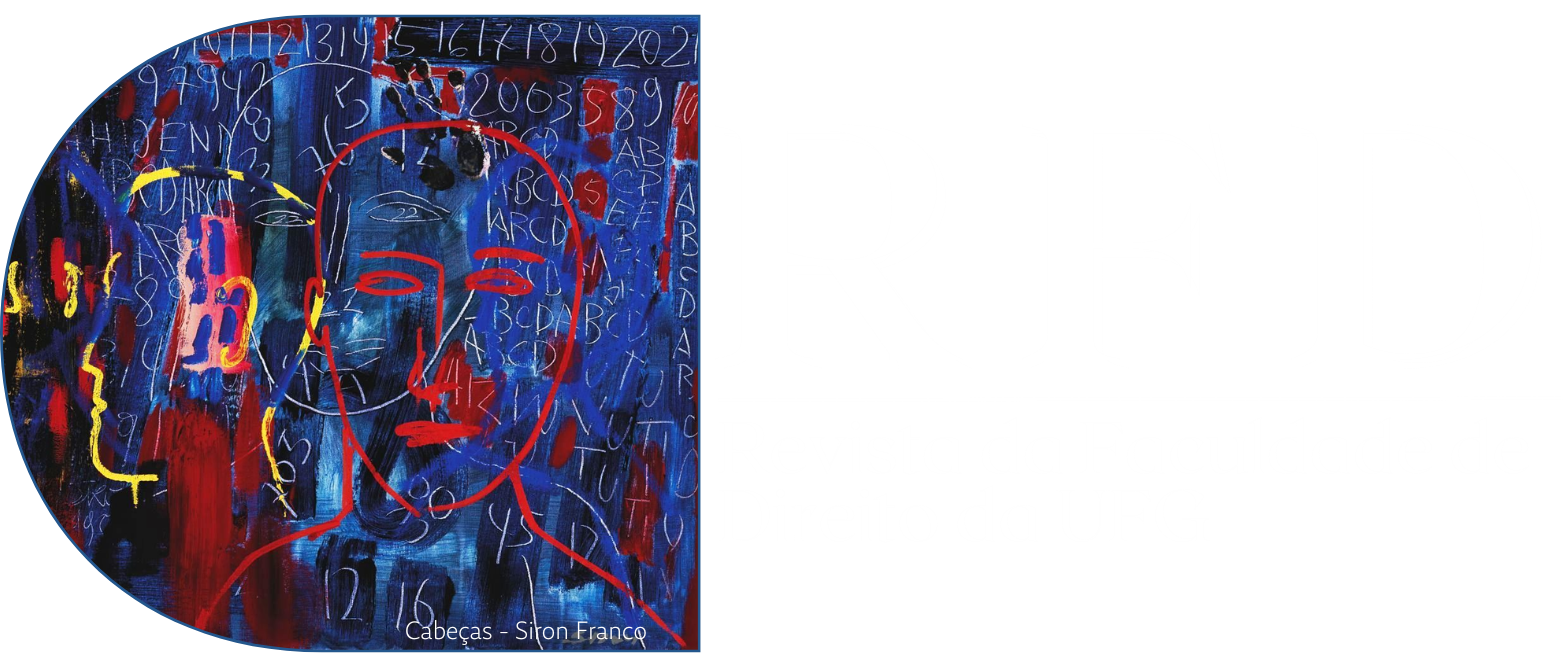
(RE)CONSTITUINDO A RELAÇÃO PROCESSUAL CIVIL: CONTRIBUIÇÕES EPISTÊMICAS DESDE A COSMOVISÃO INDÍGENA
(RE)COMPOSING THE CIVIL PROCESSUAL RELATIONSHIP: EPISTEMIC CONTRIBUTIONS SINCE THE INDIGENOUS COSMOVISION
DOI:
https://doi.org/10.5216/rfd.v45i1.63110Keywords:
Equality, Civil Process, Legal Epistemology, Law, Peripheral KnowledgeAbstract
It aimed to adopt Equality as an epistemological fundament, to verify in what extent this impacts the construction of the civil processual relationship. The hypothesis is that the traditional relation reproduces the colonization project. The data was collected by the bibliographical research, adopting decolonial thought as theoretical framework. The research is structured in three chapters, besides the introduction and conclusion. The specific objectives are: a) to identify the epistemic effects produced by territorial colonization in the field of the law; b) analyze the epistemic construction of the Brazilian civil procedural relationship and verify if there is a reproduction of the colonization project; c) by the limits of the construction of the procedural relationship and the Principle of Processual Isonomy, to re-signify the concept of equality from the margins, through the hermeneutic opening existing in the Constitutional Principle of Equality; d) adopt this peripheral equality as an epistemic basis and verify to what extent this modifies the construction of the relationship between judge and parties in the Civil Process. As a result, it was built a new epistemic construction, where there is a meeting point between de the judge and the parties, where equality means coexistence and not exclusion or assimilation of difference, moving away from the isolationist idea in the construction of legal knowledge. Instead of the subalternization of the different ways of understanding the Law, this place seeks its praise, starting from the idea that other visions, beyond State’s Law, contribute and enrich the decision that will be proclaimed.
Downloads
Downloads
Published
Issue
Section
License
Os Autores que publicam nesta revista concedem à Revista da Faculdade de Direito da UFG uma licença mundial, sem royalties, sujeita aos termos e condições da Licença Jurídica Creative Commons Atribuição 3.0 Brasil Creative Commons Attribution License
Os autores concedem à RFD UFG todos os direitos autorais sobre os artigos nela publicados, que os mantêm com exclusividade até o advento de domínio público sobre os mesmos.