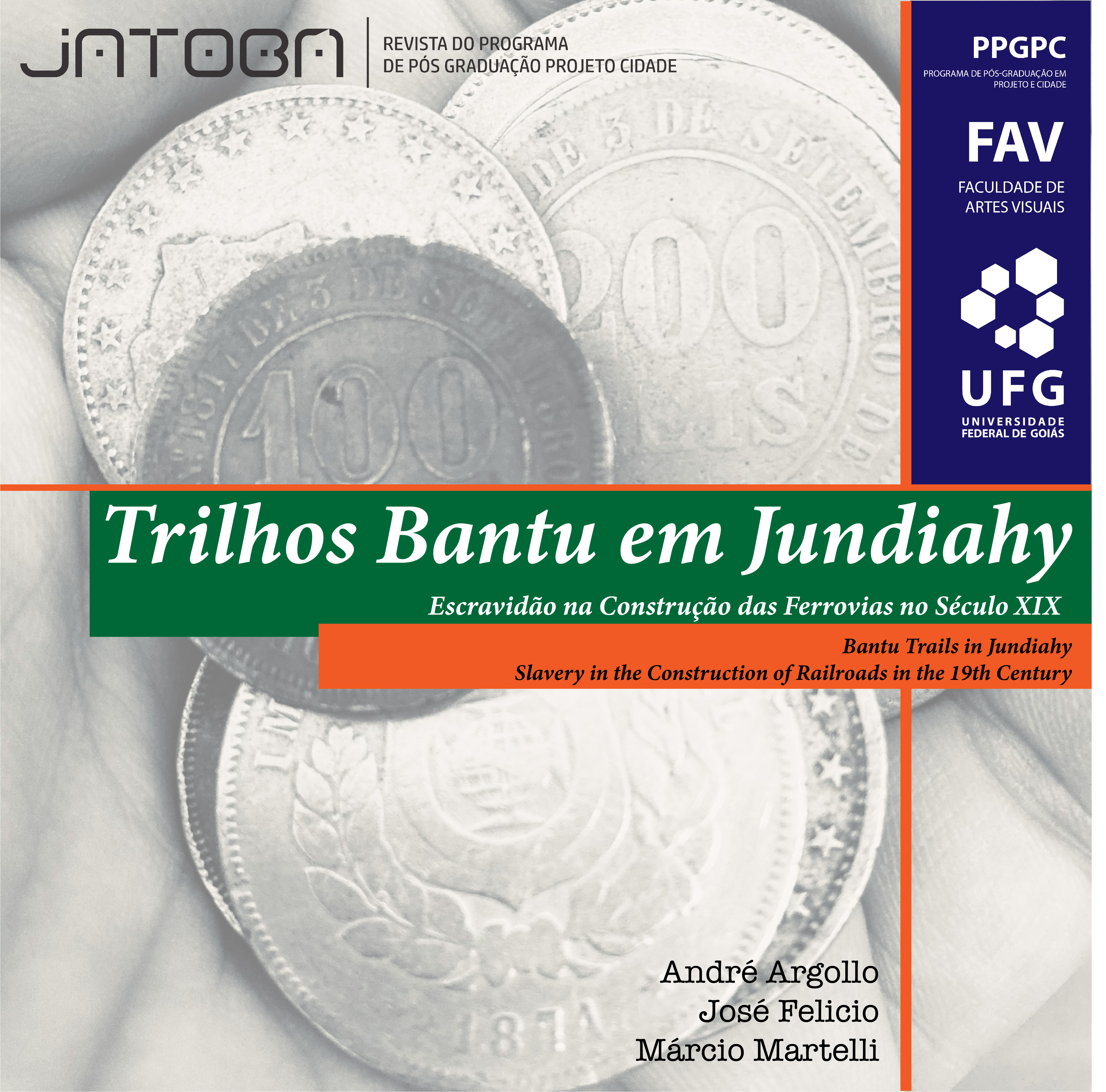
Bantu Trails in Jundiahy
Bantu Trails in Jundiahy – Slavery in the Construction of Railroads in the 19th Century
DOI:
https://doi.org/10.54686/revjat.v2i.67065Keywords:
slavery; railroad; coffee; workers; Jundiaí.Abstract
stract
In the second half of the 19th century, significant changes in the Brazilian socioeconomic environment generated a growing and worrying crisis. The possible end of slavery under pressure from England, landowning Brazil is trapped, as the construction of railways has been released and abolition is widely debated. The construction and operation used a large number of workers from the least to the most qualified, and was seen with difficulties, since the country until that moment was only concerned with commercial agriculture for export and was on the foundations of a slave society that it would collapse at any moment if new sources of labor were not found, and new forms of exploitation in addition to the existing one. Within this context, we seek to analyze how the construction of the railroads took place in São Paulo, specifically in the municipality of Jundiaí, in the interior of São Paulo, which benefited from the wealth derived from coffee production and its labor relations. Whether or not wage labor, slave labor? Work under contract? Coercive? Underemployment? Immigrants? Caboclos? Like? When?
Downloads
Downloads
Published
Issue
Section
License
Copyright (c) 2020 Revista Jatobá

This work is licensed under a Creative Commons Attribution 4.0 International License.
- Autores mantém os direitos autorais e concedem à revista o direito de primeira publicação, com o trabalho simultaneamente licenciado sob a Licença Creative Commons Attribution 4.0 que permite o compartilhamento do trabalho com reconhecimento da autoria e publicação inicial nesta revista.
- Autores têm autorização para assumir contratos adicionais separadamente, para distribuição não-exclusiva da versão do trabalho publicada nesta revista (ex.: publicar em repositório institucional ou como capítulo de livro), com reconhecimento de autoria e publicação inicial nesta revista.
- Autores têm permissão para publicar e distribuir seu trabalho online (ex.: em repositórios institucionais ou na sua página pessoal) após a publicação inicial nesta revista, já que isso pode gerar alterações produtivas, bem como aumentar o impacto e a citação do trabalho publicado (Veja O Efeito do Acesso Livre).
- Foram feitos todos os esforços para identificar e creditar os detentores de direitos sobre as imagens publicadas. Se tem direitos sobre alguma destas imagens e não foi corretamente identificado, por favor, entre em contato com a revista Jatobá e publicaremos a correção num dos próximos números.